Who was Ada Gobetti?
Ada Gobetti was one of the most high profile antifascist female figures within Italy during the interwar period and during the Partisan resistance movement in Italy during World War II. She helped transform the role of women in Italy, empowering them to transition from domestic life to active, armed anti-fascist combatants and political participants. She combined decades of intellectual resistance with active armed struggle, running safe houses and transporting weapons while documenting the experience in her Diario partigiano “Partisan Diary”.
Early Life
Ada Prospero Marchesini Gobetti was born in Turin, Italy on July 13, 1902, as Ada Prospero. In the early 20th century, Turin was a center of intellectual and industrial life. It established itself as the industrial heart of Italy that was also the powerhouse of intellectual movements blending political radicalism and technological innovation. This provided the breeding ground for socialist politics and advocates. This atmosphere would be where Gobetti’s ideas began to shape. Despite this however she grew up in a traditional, conservative household where the traditional roles of men and women were the usual staple. Nonetheless however she had a very high level education. She studied music and foreign languages at the liceo classico. She would eventually earn a degree in philosophy from the University of Turin in 1925 where she specialized in American pragmatism. In particular, she studied the ideas of John Dewey, this would end up being very instrumental in transforming her from an intellectual anti-fascist that she was early on in her life into an active, grass-roots organizer, fostering a belief system centered on education, experimental action, and democratic participation. Her studies encouraged her to view political ideas as tools to be tested in real-world scenarios, directly shaping her beliefs upon Benito Mussolini’s rise to power in 1922. Then eventually her role in the Italian Resistance and her later efforts in building democratic communities after the fall of Mussolini.
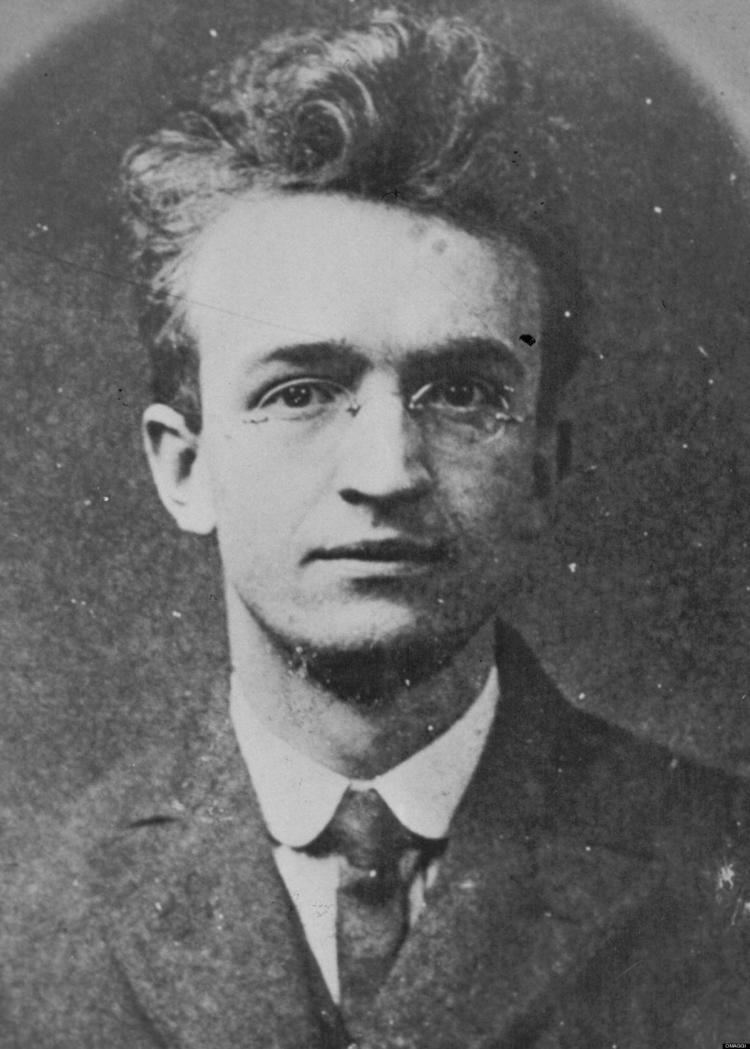
Piero Gobetti c. 1920.
Piero Gobetti and his influence
While her early life experiences were invaluable in her later adult life. By far the biggest in her life was that of her husband, Piero Gobetti. In 1918 Ada met Piero Gobetti when she was about 15 and he was a year older. The two bonded over shared intellectual interests, including reading the same books and learning Russian together during that time they became deeply involved in anti-fascist activities and would eventually marry in 1923. Piero argued that fascism was the “autobiography of the nation” and that fascism was not an accidental interruption in Italian history, but rather the logical, inevitable outcome of Italy’s deep-rooted cultural, political, and social flaws. Piero was a major proponent of liberalist ideas and believed that true liberalism required a constant “struggle and conflict” for liberty. “Italian liberalism as it had exercised to date had failed a stable social order; For him, liberalism was not a form of state, but rather meant to exercise human freedom through political struggle.” Ada adopted this view of “resistance” not just as an armed struggle, but as a lifelong commitment to values and freedoms.
Mussolini’s Italy
Although standing up for these beliefs would prove ultimately difficult. Piero himself was the victim of intimidation by Blackshirts, fascist paramilitary. He was the victim of beatings and other forms of violence and would eventually lead to his death at only the age of 24 in 1926. Italy during this time under Benito Mussolini from 1922 to 1943 was the archetype of a totalitarian, repressive fascist state. It was characterized by the suppression of dissent, intense propaganda, and a cult of personality centered on him as “Il Duce”. Life was marked by state indoctrination, day to day economic struggles despite efforts in modernization and the loss of basic civil liberties. Mussolini’s ultimate goal was to rebuild a modern Roman Empire where he sought spheres of influence in the Balkans and North Africa. Italy was one of the most important allies of Nazi Germany. However with the beginning of the war Italy’s subsequent involvement saw a string of major military failures that saw Italy’s role in the war severely diminished and would cause severe shortages, destruction, and a rapid collapse of support for the regime. And while the regime heavily suppressed opposition, underground anti-fascist organizations remained active during the 1920s and 30s. The partisan movement grew significantly. And in 1943, with the Allied invasion of Italy, it soon led to the collapse of Mussolini’s government, and the subsequent German occupation. Partisans, ranging from small groups of local civilians to large established underground political groups, fought to liberate Italy from Fascist and Nazi forces, with women in particular playing a key role in the conflict.
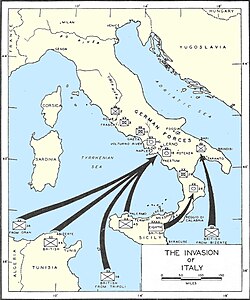
Allied invasion of Italy, 1943.
Partigiano
She served as a leader in the resistance based in Turin, she helped organize partisan brigades, and managed a network of safe houses for fighters and Allied prisoners. She was also active in printing and distributing anti-fascist, feminist, and clandestine literature, such as La Riscossa Italiana, which was an antifascist newspaper often printed in secret. She also served as and organized “staffette” (female messengers/fighters). They served in multiple roles such as transporting messages, weapons, ammunition, and intelligence between different partisan groups. She didn’t just want women to serve in supportive capacities, she actively organized women into the Resistance. She wanted the resistance to serve not just as a military operation, but as a profound, everyday ethical commitment to collective solidarity. She hoped to have the wider partisan movement and outside observers recognize the vital role of women, housewives to peasants and even the upper echelons of society as a formidable force not just advocating for women’s rights but also in the fight against fascism. Her efforts to create a more unified partisan base saw a major change within traditional Italian culture. She most notably documented her daily activities and the struggles of the resistance in her book, “Partisan Diary: A Woman’s Life in the Italian Resistance,” which was originally kept in English to avoid detection. Her diary provided not only an excellent account of partisan activity and life as well as explaining her role in the movement and helping understand how she put her ideas into the movement and how they would shape it as well.
Postwar and Later Life
After the war she continued fighting for women’s rights and a democratic, progressive Italy, viewing the Resistance as a foundation for ongoing social renewal. Following the liberation she would serve as the first female deputy mayor of Turin. She focused her efforts in her role by focusing on social welfare, educational reform, and promoting democratic values and spearheaded reconstruction efforts to rebuild the city after it had suffered heavy allied bombing due to its position as a major industrial hub. Her biggest initiative towards continuing to fight against fascism was put towards children’s education reform. She wanted to foster a system that emphasized anti-fascist education for children after. She focused on promoting active pedagogy that prioritized critical thinking. She sought to develop independent, morally engaged individuals capable of transforming society and avoiding conformity, heavily utilizing resistance ideals and encouraging children to learn through curiosity and experience. She even wrote a children’s book, Storia del gallo Sebastiano which sought to achieve this. She would eventually remarry in 1937 to an engineer named Ettore Marchesini. Her later years were marked by significant physical constraints due to illness and injury. In 1961, she worked with her son, Paolo Gobetti, and her daughter-in-law, Carla, to found the Centro studi Piero Gobetti in Turin to preserve the papers and memory of her late husband, Piero Gobetti. Ada Gobetti eventually died on March 14, 1968, in Turin at the age of 65.
Bibliography
Jomarie Alano. 2016. A Life of Resistance : Ada Prospero Marchesini Gobetti (1902-1968). Rochester, Ny: University Of Rochester Press.
Gobetti, Ada. Partisan Diary : A Woman’s Life in the Italian Resistance, Oxford University Press, Incorporated, 2014. ProQuest Ebook Central, http://ebookcentral.proquest.com/lib/unm/detail.action?docID=1760895.
| Access to University Library Resources | the University of New Mexico.” 2026. Unm.edu. 2026. https://www-jstor-org.libproxy.unm.edu/stable/29776690?site=jstor&seq=5. |